Staying in Vietnam for a long time and keeping your green card
Spending more than 6 months outside the U.S. can lead to closer questioning at entry; after more than a year a green card usually no longer works as a travel document. A re-entry permit helps protect permanent residence during a long stay in Vietnam. If you have already stayed too long, there is the SB-1 returning resident visa.
About to spend 6 months or more in Vietnam caring for parents, working or getting treatment
Already in Vietnam for more than a year for reasons beyond your control
What Phụng does
Assess the risk based on time already spent and planned outside the U.S.
Re-entry permit: prepare Form I-131 to file while in the U.S. and plan the biometrics appointment before you fly
SB-1: gather evidence of circumstances beyond your control, prepare the file and the consular interview
Keep your U.S. ties: tax filing as a resident, an address, bank accounts
Re-entry permit process
File the I-131 while physically in the U.S., ideally 2–3 months before you fly.
Attend the biometrics appointment. You may leave the U.S. afterwards.
Choose on the form whether to collect the permit in the U.S. or at a U.S. consulate in Vietnam.
Carry the re-entry permit with your green card when you return.
SB-1 is only for absences caused by circumstances beyond your control (for example serious illness or caring for a critically ill relative) with a continued intent to return. These are high-risk cases; Phụng will refer you to an attorney.
Key facts
Over 6 months (180 days)
May be treated as seeking admission and questioned; continuous residence for naturalization may be broken
Over 1 year
The green card is no longer a valid travel document unless you hold a valid re-entry permit
Re-entry permit (I-131)
Paper filing fee $630 per the USCIS fee schedule; usually valid 2 years
SB-1 visa
Form DS-117, $180 paid at the consulate, non-refundable; if approved, immigrant visa fee and a medical exam follow
A re-entry permit does not guarantee the green card if you have in fact moved your life to Vietnam. I-131 fee per USCIS fee schedule G-1055 (edition 09/09/2026); DS-117 fee per U.S. embassy SB-1 pages. Recheck with the USCIS fee calculator before filing. Checked 30/09/2026.
Common questions
Is a 5-month trip to Vietnam a problem?
Under 6 months usually does not affect the green card, though repeated long trips can still draw questions. Keep proof of your U.S. home, work and taxes.
Can I apply for a re-entry permit from Vietnam?
No. You must file while in the U.S. and usually stay until the biometrics appointment.
Does a re-entry permit protect time toward citizenship?
No. It helps keep the green card, but long absences can still break continuous residence for naturalization.
Phụng Di Trú provides document preparation, translation and procedural guidance based on public information from U.S. government agencies. Phụng is not an attorney and does not represent anyone before U.S. or Vietnamese authorities; for Vietnamese paperwork, Phụng helps prepare and file documents as the rules allow. For complex cases (waivers, risk of losing a green card, prior refusals), Phụng refers clients to a licensed immigration attorney. Phụng Di Trú is not affiliated with America.gov or any U.S. government agency.
Clients who made it
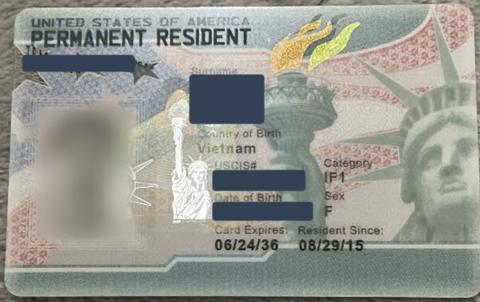
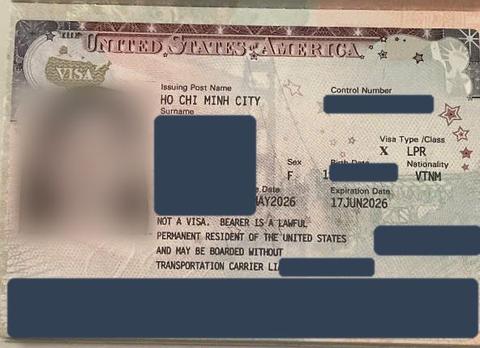
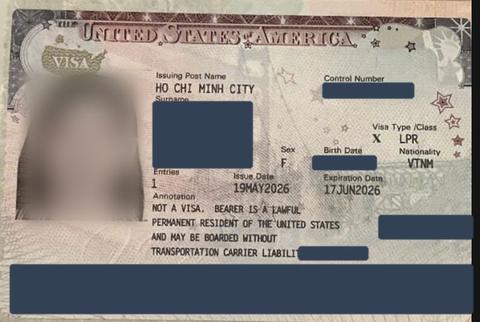
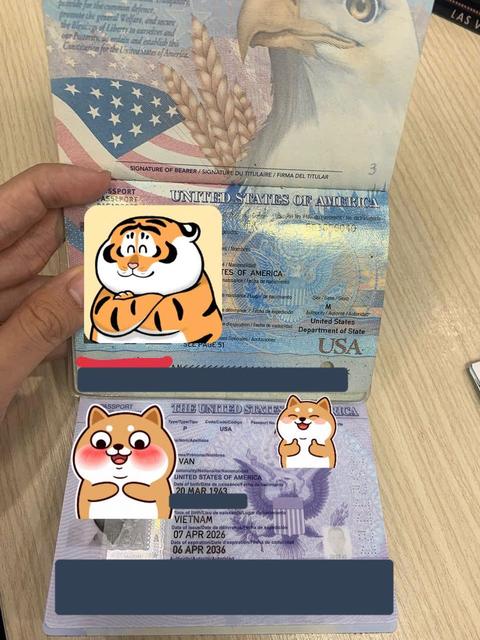
Shared with the clients' permission; personal details are covered.
N-400s filed from 20 Oct 2025 take the 2025 civics test: 20 of 128 questions, 12 correct to pass. Many cases fail on N-400 answers, time abroad and taxes instead.
A permanent resident who loses the card in Vietnam does not start over. Police report, Form I-131A, the $575 fee, the consulate appointment, and what to do back in the U.S.
 Phụng Di Trú